Design Guide for Video Surveillance Structured Cabling
A comprehensive engineering reference covering cable selection, topology design, PoE power planning, grounding, testing, and lifecycle management for IP video surveillance systems — from camera endpoints to the headend.
System Overview
Video Surveillance Structured Cabling Design is the systematic engineering of cables, pathways, power delivery, grounding, labeling, testing, and maintainability from camera endpoints to the headend. The goal is not merely "getting links up," but ensuring long-term stable video: continuous bitrate delivery, non-dropping power, interference resilience, capacity growth, rapid fault localization, and predictable maintenance.
This guide covers camera-to-access cabling, access-to-aggregation backbone, headend patching, cabinet and room pathways, PoE and auxiliary power distribution, surge protection and grounding interfaces, labeling, testing and acceptance, and operations and maintenance expansion provisions. A well-designed cabling system reduces approximately 80% of recurring faults — including intermittent link drops, PoE brownouts, moisture ingress, mislabeling, poor termination, and grounding issues — and massively lowers truck rolls and downtime.
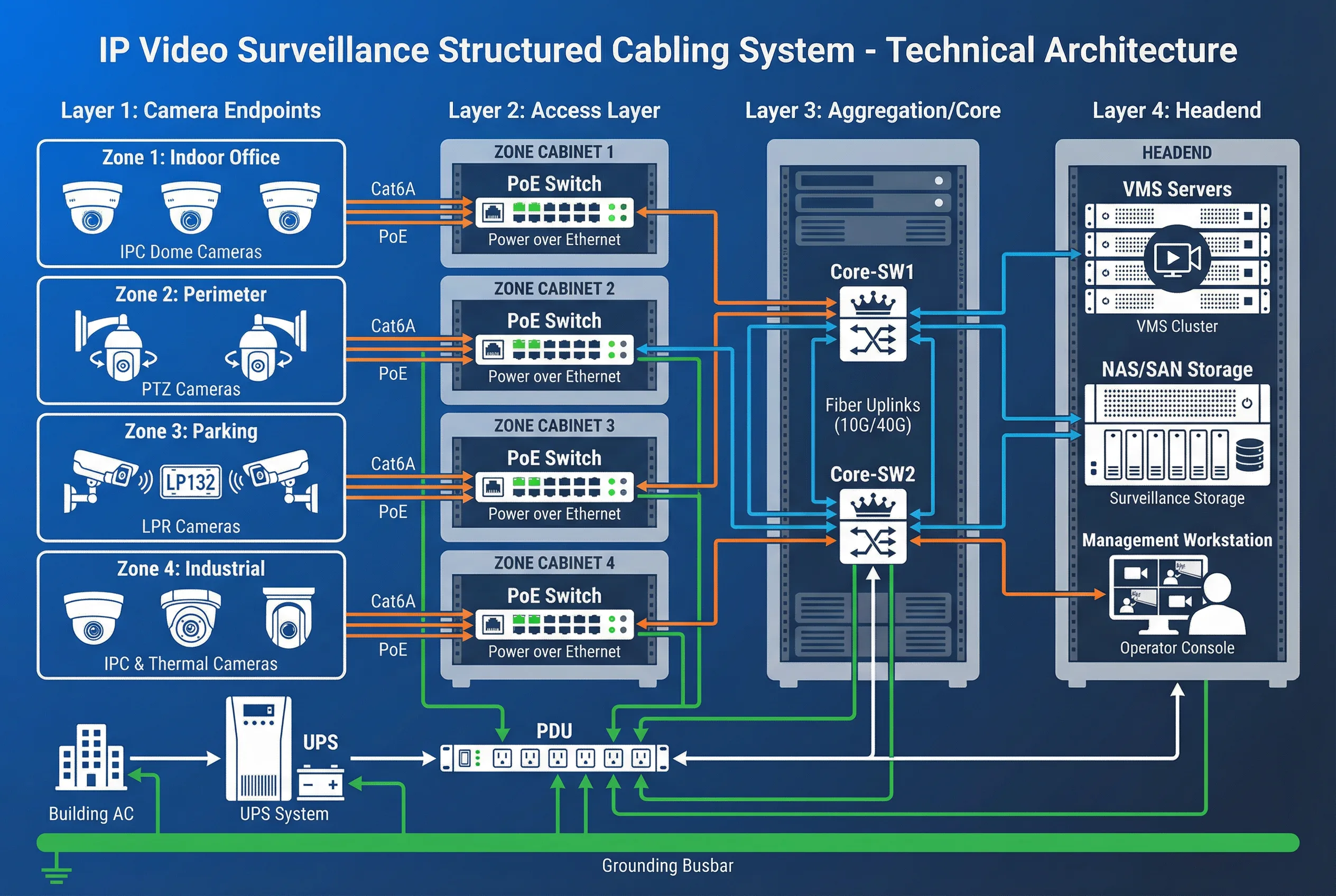
Figure 0.1: Overall System Architecture — Four-layer structure from camera endpoints through access, aggregation/core, to headend, with power and grounding layers.
Scope: This guide covers from camera tail to headend patch panel, including cabinets and pathways, and design interfaces to UPS, grounding, and physical security. Out of scope: camera analytics algorithm selection, VMS feature evaluation, civil construction beyond cable pathway provisions, and telecom carrier WAN design.
Quick Design Targets
The following table provides baseline recommendations for the most critical design parameters. These targets represent engineering best practices for enterprise and campus IP surveillance deployments at the 64–512 camera scale.
| Item | Recommended Range | Why It Matters | Typical Acceptance Evidence |
|---|---|---|---|
| Camera link medium | Cat6 / Cat6A | Lower insertion loss, better PoE margin | Copper certification report |
| Access uplink | 1G/10G fiber | Distance + EMI immunity | OLTS/OTDR results |
| PoE utilization per switch | 60–80% of budget | Thermal + aging margin | PoE budget sheet + load test |
| Patch cord length | ≤3 m typical | Reduce clutter and loss | Rack inspection |
| Copper channel length | ≤100 m (incl. patch) | Ethernet standard compliance | Certification PASS |
| Outdoor camera drop | IP66 junction + drip loop | Prevent moisture ingress | Visual inspection + photos |
| Label coverage | 100% ends + intermediate points | Fault localization speed | Label audit |
| Fiber spare cores | 25–50% | Expansion + repair capacity | Fiber schedule |
Main Functions of Structured Cabling Quality
Structured cabling quality directly determines the reliability and performance of the entire surveillance system. The diagram below illustrates the eight core functional dimensions that a well-engineered cabling infrastructure must deliver.
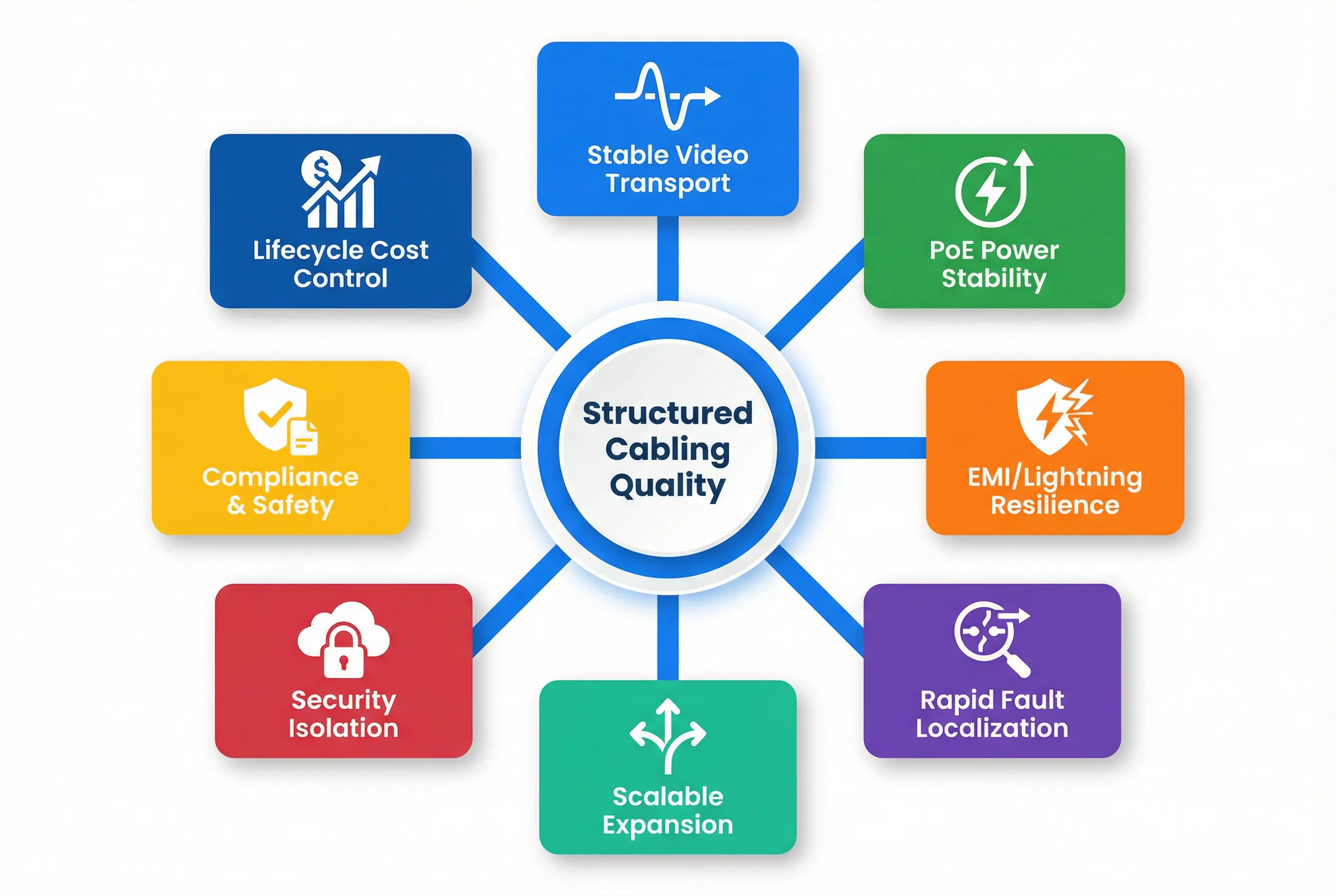
Figure 0.2: Main Functions of Structured Cabling Quality — Eight core dimensions radiating from the central quality hub.
- Stable Video Transport: Certified copper/fiber ensures deterministic bitrate delivery without micro-drops or packet loss.
- PoE Power Stability: Properly budgeted PoE with UPS backup ensures cameras remain online during power events.
- EMI/Lightning Resilience: Shielding strategy, pathway separation, SPDs, and earthing protect against interference and surge damage.
- Rapid Fault Localization: Comprehensive labeling, patch discipline, as-built documentation, and port mapping reduce MTTR dramatically.
- Scalable Expansion: Spare fibers, spare conduits, reserved rack units, and structured numbering enable growth without re-cabling.
- Security Isolation: Cabinet access control, separated pathways, and controlled demarcations prevent physical and logical tampering.
- Compliance & Safety: Fire-stopping, grounding, and low-voltage safety norms ensure regulatory compliance and personnel safety.
- Lifecycle Cost Control: Quality infrastructure reduces recurring faults, truck rolls, and emergency replacements over the system lifetime.
Chapter Navigation
This guide is organized into twelve chapters covering all aspects of video surveillance structured cabling design, from system components and design methods through to quality acceptance and ongoing operations.